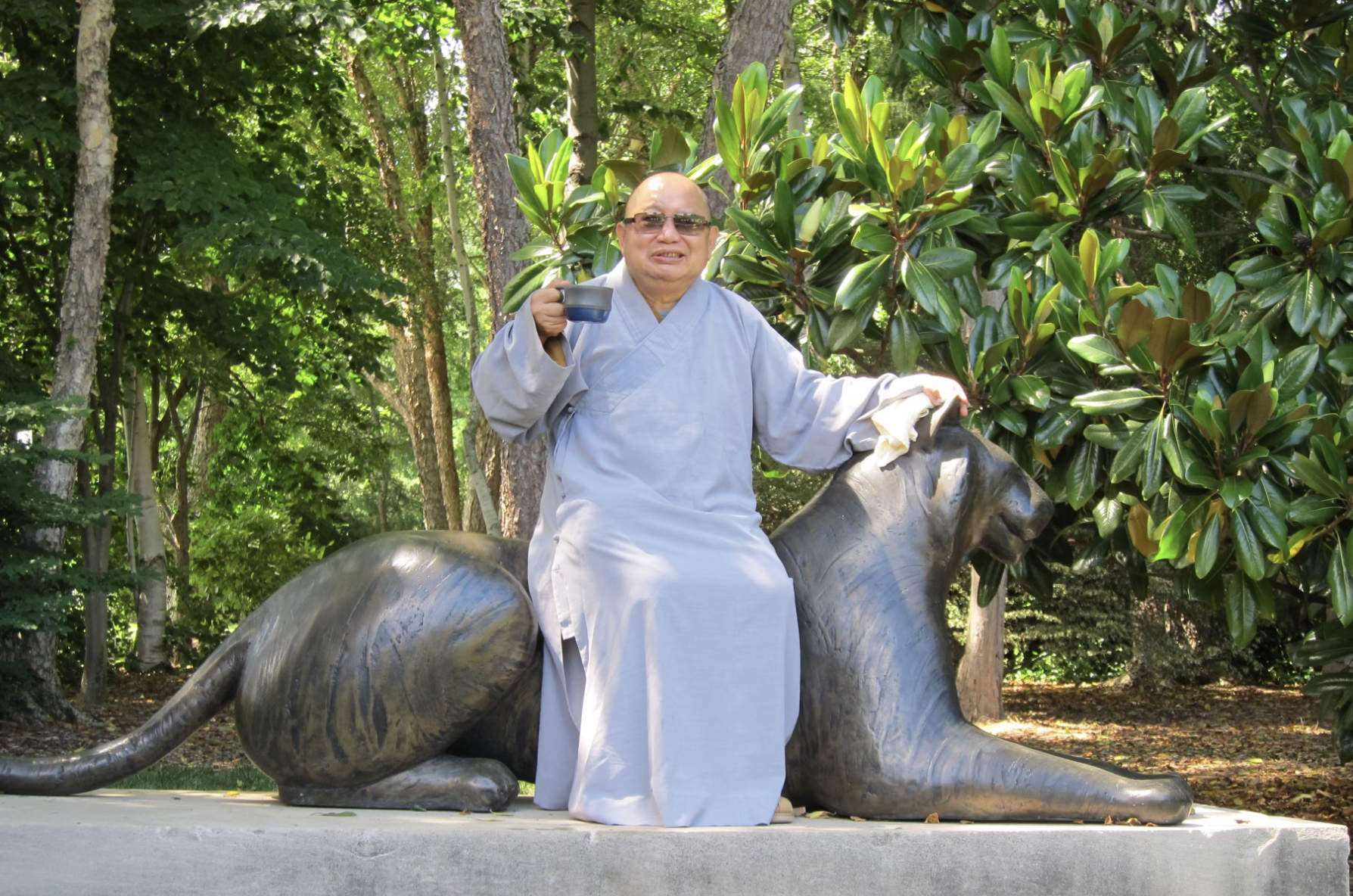
Learning with Master Guoru
Dear friends,
How are you? How is your meditation practice going? This is Linda Huang (Changji), the second Dharma heir to the late Master Guoru (1951-2024). In gratitude and recognition of the impact of Master Guoru’s teachings, I am initiating a project to invite you to share your learning experiences. Please record a 3-to-10-minute video or write an article about your learning journey with Master Guoru, whether through events, services, classes, retreats, personal consultations, or by reading his books.
My hope is to eventually compile all contributions into a book. However, the initial focus of this project will be a series of videos dedicated to honoring Master Guoru’s lifelong teachings, recognizing that videos have become a primary medium for sharing information in our era. If resources allow, I will also work on compiling the collected content into a book that highlights Master Guoru’s teachings and influence.
With all my heart, I sincerely I invite you to participate in this project. Please send your YouTube video link and/or article directly to me at linda@nonezencenter.org. I will share your submission on the None Zen Center’s Facebook page and website, as well as on the Facebook page of Chan Grove, the temple founded by Master Guoru. If resources allow, I also plans to compile the collected content into a book that celebrates Master Guoru’s teachings and impact.
Any language, style, and structure are welcome, as they reflect your unique way of sharing your learning experience. If you speak more than one language, you are welcome to provide versions in multiple languages. To help guide those who may wonder what to include, here are some suggested points:
- Your name and primary location (e.g., This is Linda Huang from San Jose, California).
- When, where, and how did you first meet Master Guoru or learn from his books?
- What are the most important concepts you’ve learned from Master Guoru’s teachings?
- How have your meditation or Buddhist learning experiences been with Master Guoru? For example, which meditation method do you use, what instructions did he give you, and how did they benefit your practice, if at all?
- How have Master Guoru’s teachings influenced your life?
- How do you plan to continue your meditation or Buddhist practice moving forward?
- Is there anything you would like to share with Master Guoru or your fellow practitioners?
Thank you for taking the time to share your experiences. Your generosity will help fellow practitioners better understand Master Guoru’s teachings and the core values of the lineage teachings in Chinese Zen Buddhism.
Below, please find the learning experiences with Master Guoru, listed in the order they were received, with the most recent submissions at the top. These reflections are shared in various languages, as they come from practitioners from diverse backgrounds.
[Learning with Master Guoru Series 跟隨果如法師學習系列] – – provided by Karen Yang posted on February 6, 2025.
Shifu hao, tongxue hao,
This is Karen Yang from Taipei, Taiwan. I am a disciple of Shifu (Teacher) Linda and Shifu (Teacher) Jeremy, the founding masters of the None Zen Center. I have been practicing Zen meditation at None Zen Center since 2013. I first learned about Grand Teacher, Guoru, from Shifu Linda and Shifu Jeremy, and then I had several opportunities to visit Grand Teacher in person with my fellow practitioners.
In one retreat, Shifu Linda shared Grand Teacher Guoru’s meditation experience. Grand Teacher’s mind kept playing movies in the beginning of his meditation until there was nothing left to play in his mind, so he could only turn his focus to the single doubting question (Huatou) and work very hard. When I heard this story, I felt encouraged because I had always been bothered by my endless stream of thoughts. I was worried that someone like me, who had been constantly playing movies in my mind since childhood, might be unable to investigate Zen. At that time, I thought I had similar problems as Grand Teacher, and if he could achieve it, then maybe one day I could too. The story of Grand Teacher’s meditation, as I heard it from Shifu, gave me confidence in practicing doubting meditation.
I am very fortunate to have had the opportunity to visit Grand Teacher in person. I remember the first time I met him. My fellow practitioners and I went to Yufo Temple to express our gratitude to him. He was so kind and smiled at us warmly. He would always ask us in the kindest voice, “Do you have any questions?” In response to our questions, Grand Teacher often reminded us, “Don’t dwell on forms. Don’t get stuck in good and bad, yes and no, right and wrong.” I kept this in mind.
Another time, one of our fellow practitioners asking about how to practice Huatou (doubting question). Grand Teacher guided us, “As soon as you wake up and open your eyes in the morning, ask yourself what no-self is. Hold this doubting question in mind, but don’t die in Huatou. You don’t necessarily have to be sitting on the meditation cushion to start your meditation.” This aligns with Shifus’ teaching, “Zen is a 24-hour practice, not something limited to the cushion. Zen meditation is integrated with your life.”
In 2023, I had the precious opportunity to attend one-day retreats at Chan Grove led by Grand Teacher. Grand Teacher taught us that Zen meditation is not limited to the Zen hall, and the true practice is not about clinging to the question of what non-self is and asking it repeatedly. The true work of investigating Zen requires observing and being aware of our eyes, ears, nose, tongue, body, and mind every moment, continuously. He also emphasized that the most important thing is to first learn the correct Zen concepts. With these correct Zen concepts, we develop faith in the teachings; for example, the doctrines and the Buddha do not deceive us. But then, how come the doctrine says there is no eye, no ear, no nose, no tongue, no body, and no mind? Once again, the teachings of Shifus align with those of Grand Teacher, Guoru. Shifus often use the same words to remind us to doubt on every mind movement.
What hit my heart the most is Grand Teacher’s passion, compassion, and persistence in guiding people to investigate Zen. During these one-day retreats, I saw him earnestly explaining Zen concepts, using various examples. I saw him looking a bit tired, sitting in a chair, yet soon after, when we practiced walking meditation, he walked majestically along the corridor, watching us practice. Even though he didn’t seem to feel well, he still instructed us with strength and energy powerfully.
One time, a Grand Teacher’s disciple announced some rules to the practitioners, when suddenly, Grand Teacher sternly shouted at her, “You’re speaking so weakly! I’m not letting you handle this job this afternoon. Come outside later and practice shouting one hundred times with me!” This reminded me of the time Shifu Linda had shouted at me, “Speak louder!” when I was nervously introducing Grand Teacher to my project on the trip he visited the Tainan center in 2021. Shifus inherited the teachings from Grand Teacher. I realized that I was learning not only from Shifus but also from Grand Teacher. They guided us in every aspect, both on and off the cushion; their sharp eyes could detect even the subtle movements of our minds in how we spoke or acted.
Grand Teacher’s compassion and love for people have encouraged me, and I dare not give up easily when I encounter difficulties in my Zen practice. Shifu Linda always tells us that the best teaching she received from Grand Teacher is ‘Good, good, Continue! Continue!’ Shifus’ voices saying ‘Continue!’ echo in my mind, reminding me to use the last bit of strength to ask one more question, continue my Zen practice, or face challenges in my everyday life.
I will continue my Zen meditation, being honest with myself, being aware of every mind movement, and with the correct Zen concepts, I will keep doubting upon our mind movements to uncover our self-nature. With the teaching that we are inherently ‘no-self,’ I remind myself that there is nothing to lose and nothing to gain in investigating Zen. I also keep in mind that the purpose of Zen meditation is to uncover our true nature. I will follow Shifus’ instructions accordingly and continue moving forward on the path of Zen practice!
Xie Xie Grand Teacher! Xie Xie Shifus! Xie Xie Tongxues!
[Learning with Master Guoru Series 跟隨果如法師學習系列] – – provided by 詹順強 posted on February 4, 2025.
那年,我因公務踏上了韓國首爾的土地。週末閒暇,同事熱情地邀我參觀當地最大的基督教堂——汝矣島純福音教會。這座教堂與其說是宗教場所,更像是一個功能性極強的集會中心,簡樸而宏大,卻缺乏天主教堂的藝術震撼力。或許察覺到我興致不高,同事神秘兮兮地提議搭教堂的擺渡車前往切頭山聖地。他說:「那裡可是基督教徒的朝聖之地,全世界有很多基督教徒上山,住在小屋裡禁食禱告,甚至見到了上帝。」
我笑著點頭,內心卻波瀾微起。從小學起,我便對宗教充滿了好奇。我閱讀了大量書籍,試圖理解每個宗教的歷史、教義與修行法門。最終,佛教的智慧深深吸引了我。我不相信唯一神教所描述的創世紀,甚至對上帝的存在也持懷疑態度。然而,當同事說「也許你也能在那裡見到上帝」時,我的內心竟有幾秒的動搖遲疑。儘管如此,由於擺渡車的時間問題,我們最終取消了行程。
那一夜,我輾轉反側,羞愧涌上心頭。那短短幾秒的遲疑,仿佛揭露了我對佛教信仰的不堅定。我開始質疑自己:若真見到了上帝,是否會動搖我數十年來的信仰?在接下來的兩三年裡,這個問題一直縈繞在我心頭。我開始思考,人生無常,若未來遭遇困境,我是否能依靠宗教的力量安然度過?那些在基督教信仰中重生的故事,是否也能在佛教中實現?我的信仰能否真正成為穿越人生困境的力量?
最終,我意識到問題的根源在於我缺乏實際的修行。我的信仰僅來自書本,而非親身體驗。於是,我決定尋找一位師父,開始真正的修行。
2014年農曆新年前,我與家人漫步在馬六甲熱鬧的街頭。炎熱的天氣,熙攘的人群中,一間名為「金星上人圖書館」的地方吸引了我們的腳步。這是青雲亭古廟所建立的圖書館,我們決定進去享受空調和幽靜的氛圍。圖書館裡張貼著一張果如師父手持香板的海報,那氣勢逼人,宛如武俠小說中的絕世高手。我立刻被吸引,撥通了電話。接線的師姐熱情地說:「來吧,歡迎參加念佛禪七。沒有經驗?沒關係,我們就是要教像你這樣的新人。」
三個月後,我驅車五小時,來到了金馬崙高原的萬佛寺,參加人生中的第一個禪修。這七天的禪修生活並不容易。腿疼、腰酸、睡眠不足的煎熬幾乎讓我崩潰,每一天都讓我萌生逃離的念頭,可惜車鑰匙已被沒收。
念佛、打坐、拜懺,這些對我來說都是全新的體驗,讓我感覺如臨大敵。尤其是打坐,20分鐘的盤腿讓我痛苦不堪,劇痛無比。上座後木魚聲剛起,我便痛不欲生,更別提專注呼吸了。拜懺時候,法師的責罵式教導更是激發了我的憤怒,甚至讓我產生了搶過香板反擊的衝動。
一切都格格不入。這個禪七體驗並非我憧憬和幻想的脫胎換骨。我家的嬌妻本擔心我歸來後會不會出家,確實多慮了。
然而,果如法師的開示卻讓我深深折服。他講述了自己的童年、成長歷程,以及如何在馬來西亞教書的點滴。他深入淺出地講解空性道理。他還提出了一個令我陷入深思的問題:「大乘佛法說,法法不生滅,但我們的生命卻有成住壞空,這如何解釋?」他也問:「佛說一切眾生本自具足,為何我們體悟不到?」
果如法師教誡我們,學習佛法要發大誓願,為濟度眾生脫離苦難,來莊嚴成就自己,才能得力受益。他指導我們不要在人我是非上起心動念,而要用智慧與慈悲來涵養。修行不僅在禪堂打坐,更要在生活中降伏其心,與無我相應,修行才不會跟生活脫節。他說修行要先建立正知見。平時用功要時時觀照無一實有,但不斷滅。我們的修行不是添加和補充不足,而是恰恰自己本有的, 用般若智慧去觀照,但心無所求,無所執, 不為福報去做。當定慧力達到統一,會相應到諸法空寂,就不會有顛倒。
這些話語讓我決定繼續前行。
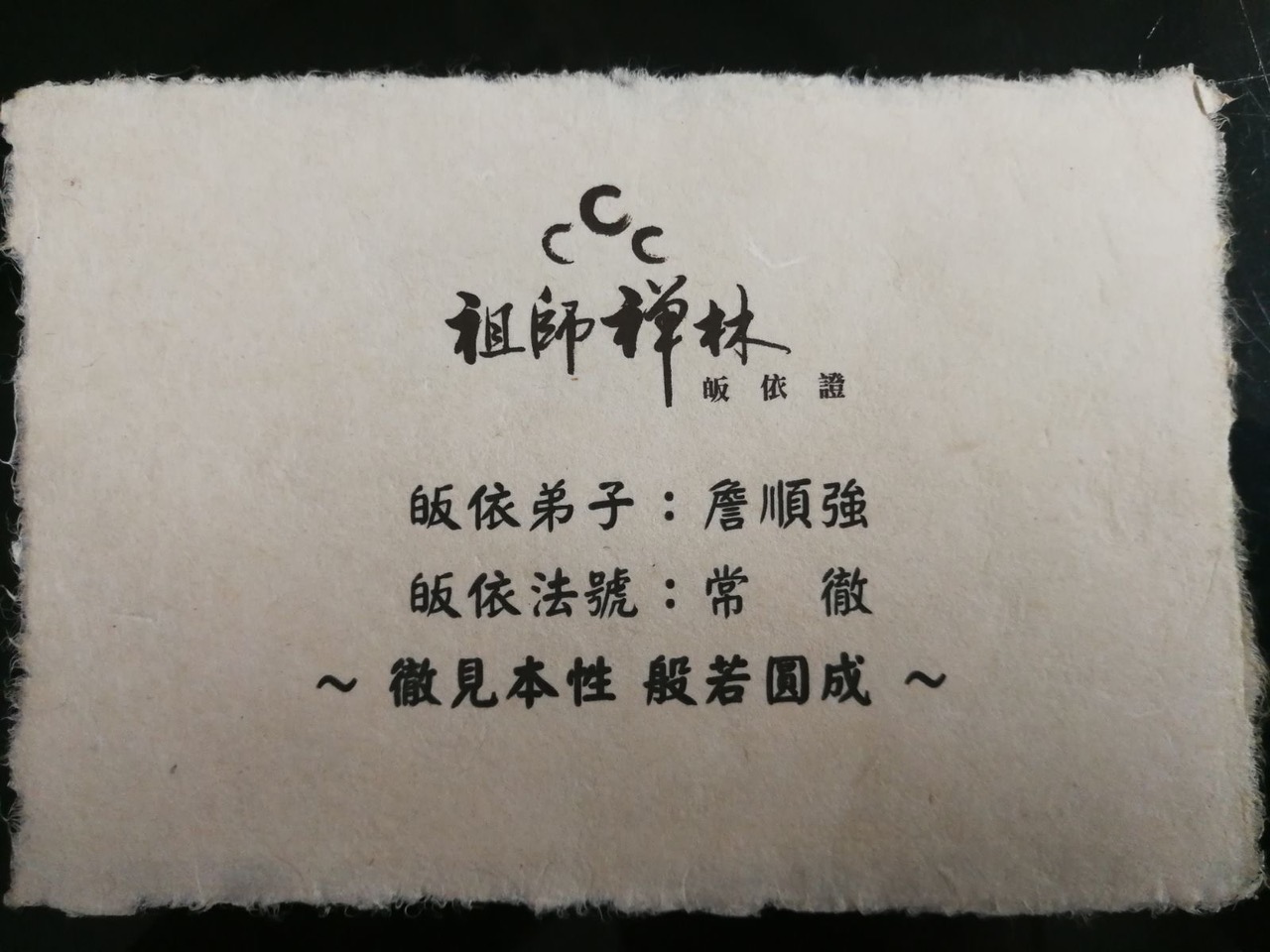
2014年8月8日,我飛往臺北祖師禪林,參加禪三,開始學習話頭禪。腿疼與睡眠不足依舊困擾著我,但三天的禪修讓我意猶未盡。翌年新春,我無懼無畏地報名參加了中英精進禪十。解七前一天,我正式皈依了佛法僧,果如師父賜予我法名「常徹」,意為「徹見本性,般若圓成」。皈依證很有特色,印有祖師禪林的標識,背後印有皈依的意義,指導正確的觀念、內涵和方向。
2015年12月,果如師父再次蒞臨金馬崙萬佛寺,舉辦念佛禪七。解七後,我帶大家到茶園喝茶。剛吃過榴蓮的果如師父品嚐著多年未喝的拉茶,心情很愉悅。平時師父有種不怒而威的樣子,但一旦師父回憶起他童年和青年的趣事,臉上洋溢著孩子般的爛漫笑容,興高采烈,整個場景便充滿了歡聲笑語。他的故事總是趣味橫生,每次聽都讓我心生觸動。
2016年至2017年,我多次參加果如師父在祖師禪林和馬來西亞的禪修。到臺北出差時我也曾到佛教基金會聽師父指導祖師語錄。孝順的常真法師總是安排我坐第一排。師父一見到我,便高興地回憶起佛光山佛學院的馬來西亞同學,以及他在馬來西亞教學的經歷。整個講堂都是他呵呵呵的笑聲。
我在修行上不夠積極精進,在禪堂裡都沒有體驗任何高深境界。我記得師父慈悲鼓勵我,修行的重點在於能否把佛法化為生命裡真正的體驗,能否消融妄想執著。在佛陀基金會那幾次聽他開示,我都感受到他對佛法的深刻理解與無盡慈悲。他教導我們如何在紅塵裡,盡力依本分去做,隨順因緣果報,不要去分別著相。一旦生煩惱,掉到相裡要馬上起智慧關照,回到無所得失的心態。這教導對於我的工作事業有非常大的正面影響,使我盡全力把事做圓滿,得到領導的賞識。很有趣的, 師父也鼓勵我們,好好享受咖啡的醇香,正確的使用金錢帶來的快樂, 甚至夫妻倫理之樂。這麼活潑的指導,讓我每一次都刷新對師父的看法。這些指導,使我平衡了追逐物質虛華與精神的需求,恆順因緣的變化去努力生活,享有生活美好的萬物萬事上,得到自在安然。
在每一個開示,師父樂而不疲分享他當小沙彌被他師公磨煉的故事,被他師父調教的過程,以及他的成長歷練,我聽了不下十次。每次聽都不會厭,他總是説得妙趣橫生,充滿感情,有時無限懷念和感恩之情洋溢在臉上。師父説:「不要只會聽故事,你要懂我説的故事背後的含義。」這些故事在我心裡紥根。有時我遭遇不公對待,受到委屈,就會想起師父的故事,回想他教導的智慧。慢慢地,心裡的負面情緒就被消融。
2018年後,因私務繁忙,我未能再參加禪修。直到果如法師圓寂,我在大殮儀式上再次見到他。他的遺容安詳慈悲,嘴角帶著微笑。
後來,我在YouTube上重溫師父的開示。他在最後一次禪二開示中,講述宗教經驗與見性經驗的區別,解答了我多年前對上帝的困惑。很多宗教,都有神秘的宗教經驗,當一位教徒的身心非常專注,集中在信仰裡的禱告或儀式,與外在的力量相應, 就能產生不可思議的力量。這種宗教經驗來自於外來力量附體, 一般不能複製,怎麼來怎麼去無法控制,欠缺修行理論。他強調,佛教的見性經驗則是內心的覺醒,從小我到大我的升華,開悟後的力量不會隨時間退轉,能保任並教導他人。這種體驗與佛菩薩、祖師大德的體悟是一致的。我懂了宗教體驗的道理後,不再丟失佛教的信心。在過去的禪修裡, 師父根據自己的經驗,提到「佛經裡說的都是真的。」每一本佛經裡都展現不可思議的神通。佛也說,佛是不妄語者。師父從來不說神通之事,苦口婆心的指導我們修行不要落在身心的好壞,那只是相上的進進退退,妄想心無法相應到諸法的清淨和圓滿。
「人要對自己的生命有無限的嚮往。」這是師父留給我最有力量的一句話。無論遇到什麼困難,我總會想起師父的故事與教導,提醒自己生命的本質是安然自在與圓滿。
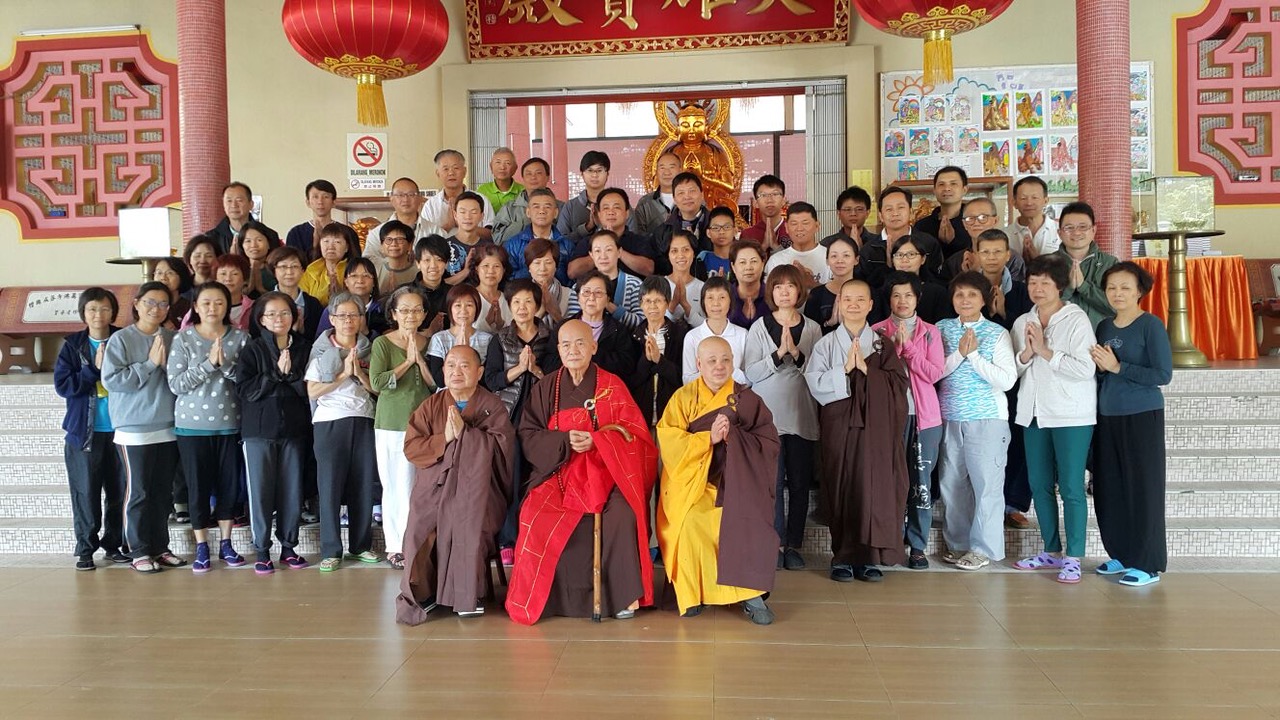
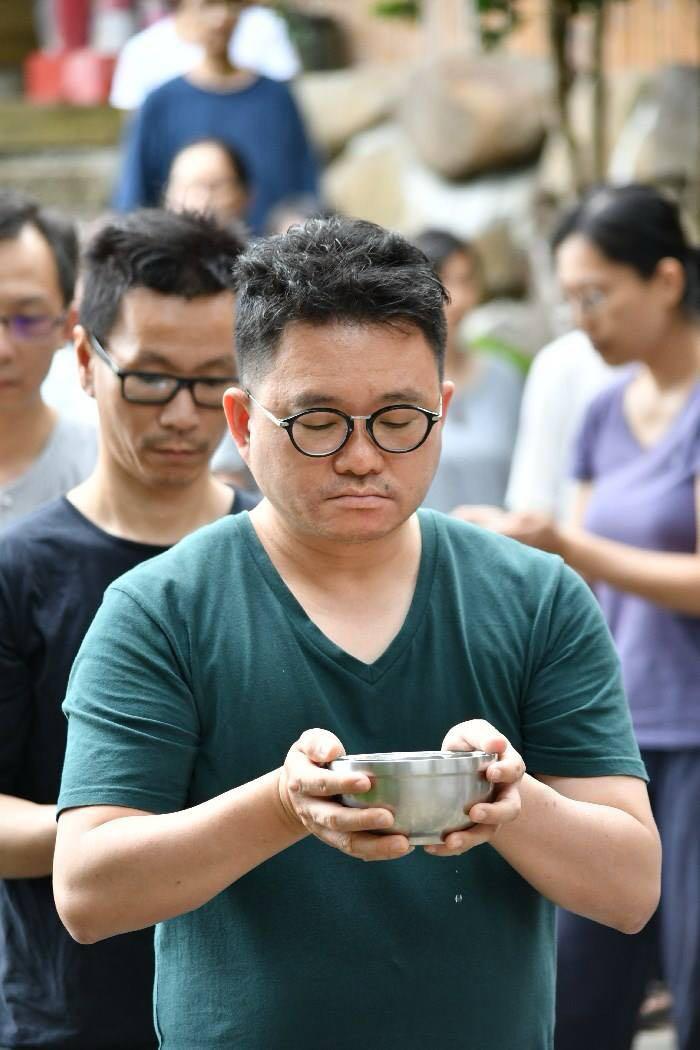
Shifu hao, Tongxue hao. My name is Jeremy Yo, and I live in Taipei, Taiwan.
I began attending the beginner’s class at None Zen Center on April 10, 2013, studying Zen meditation under Shifu(Teacher) Jeremy and Shifu(Teacher) Linda. It was through them that I came to know our Grand Teacher Master Guoru. Initially, my Shifus would often mention GrandMaster Guoru’s guidance and share stories about his learning journey and experiences. The first time I met GrandMaster Guoru in person was at the Yufo Temple in Zhonghe. I truly came to know him when I read his first book, Activate Your Buddhist DNA, which details his growth and learning experiences, giving me an initial understanding of him.
In my Zen journey, I’ve experienced ups and downs—sometimes being very diligent and devoted, while at other times feeling frustrated and ready to give up. I remember one time attending a one-day retreat led by GrandMaster Guoru at Chan Grove. At that point, I was deeply discouraged and nearly ready to give up on Zen meditation. Yet, during class, when I saw GrandMaster Guoru passionately explain how to practice and guide the practitioners in meditation, it reminded me of Shifu Linda. She teaches with the same dedication, always eager to share the most precious parts of her experience with her students, showing her deep passion for life.
The transmission between GrandMaster Guoru and Shifu Linda is something I witnessed firsthand, yet I lack the strength and courage of a true Zen practitioner. I indulge in worldly desires and distractions, making excuses for my lack of bravery and responsibility. As a result, my meditation practice has become stagnant, with no concentration or awareness. I have become a dull, unfeeling person, wasting the guidance of my teachers and the mutual support of fellow practitioners.
GrandMaster Guoru has left us, but he left behind the model of a true Zen master. His growth, learning, and teaching process all serve as examples for us. Meditation filled him with passion for life and made his life more vibrant. I take this as encouragement, hoping to move forward boldly on the Zen journey so that I too can share my passion for life and live a life as vibrant as GrandMaster Guoru’s and Shifu Linda’s .
When GrandMaster Guoru passed, I couldn’t help but break down in tears. I wasn’t just mourning the loss of a true Zen master but also grieving for the time I had wasted. GrandMaster Guoru once said, “What is difficult to endure, endure it; what is hard to accomplish, accomplish it.” No matter how frustrated I may feel in my Zen journey, I will choose to keep going.
GrandMaster Guoru devoted his life to perpetuate the Lineage Teachings of Chinese Zen Buddhism, which is itself a manifestation of life’s passion. I sincerely hope that I will not waste any more time on my Zen journey and that I will have the companionship of everyone on this journey.
Xiexie Shifu, Xiexie Tongxue
[Learning with Master Guoru Series 跟隨果如法師學習系列] – – provided by Lisa Shen, posted on December 30, 2024.
In 2014, I was working as an editor at Chan Grove, often having the chance to listen to my Shifu, Master Guoru’s teachings. One day, he was teaching from the Zhaozhou Record of Sayings. Something seemed to have moved him, as he gestured while speaking: “When you have understood the truth of your life, you must go into thousands and thousands of homes. To do what? To perform singing and dancing, as if you were busking! Because sentient beings do not understand their true nature, you need to perform it for them so they too can benefit from Buddhadharma, leaving suffering and attaining happiness.” Seeing his expression as he mimicked “performing singing and dancing,” I couldn’t help but burst into laughter. Then, tears flowed uncontrollably. Feeling embarrassed, I quietly wiped them away. He looked at me from the stage, and my tears flowed again.
That was already ten years ago. I went through the Chan masters’ record sayings, trying to find out which passage my Shifu was referring to when he said those words, but I couldn’t find it no matter how hard I looked, so I eventually gave up. The ancestral master Zhaozhou lived over 1,100 years ago, and I may not be able to fully grasp his teachings, but remembering my Shifu’s words is enough for me: “You need to go into thousands and thousands of homes, performing Dharma for all sentient beings to see.”
During meditation retreats, Shifu performed as a fierce and stern demeanor. In 2009, when he first time led a 10-day Huatou Retreat at Dharma Drum Retreat Center in New York, he had us take off our shoes and socks and walk briskly on the concrete of the parking lot. We came back, each gritting our teeth as we cleaned the gravel and wounds from our feet. Later, he went to Vancouver, Canada, to lead another Hua Tou meditation retreat. In the meditation hall, there were moments when some people were screaming like ghosts, others were crying or laughing loudly, and some even rolled around on the floor… That retreat became legendary, and many practitioners in Vancouver still feel a lingering sense of awe from the experience.
The year I was working as an editor at Chan Grove, one day, while I was editing a manuscript with Shifu, I received a call from my father in Vancouver—my cat was in kidney failure and was dying. After hanging up, I wandered to the edge of the woods, dazed. Shifu waited for me for a long time, but when I didn’t return, he came over and asked me what had happened. When I turned around, he saw my face covered in tears and was visibly startled. After understanding that it was about my cat, he angrily said, “You have no strength at all. How can you help others like this?” Above us, the meditators practicing walking meditation in the corridor were secretly watching us. I said, “Shifu, if you’re acting like this, they’ll think you made me cry.” He glared at me and said, “I don’t care!”
He was clearly concerned about me, yet he insisted on playing the role of a strict old monk!
. When he had tea and chatted with visitors, he could actually make everyone laugh heartily. That I truly admired. Sometimes I found it more difficult than sitting in the Chan Hall. During the Lunar New Year, the room filled up with old followers coming to pay their respects. He used a nutcracker to crack walnuts for everyone, cracking one for you, another for him, one more, and yet another. I finally couldn’t help but ask, “Shifu, doesn’t your hand hurt?” He just kept laughing and replied, “No, not at all, it’s fun!”
There, like this, he often inadvertently revealed the tenderness from the bottom of his heart. So when his disciples had disagreements, he looked at the computer and spoke softly as if murmuring to himself, or as if trying to explain the difficult situation, “Both the palm and the back of the hand are flesh.”
Once, I was in the same car with Shifu after retreat. I gazed at the waterfowl flying in the distance, I asked, “Shifu, how come there is no bird?” To my somewhat irrelevant question, he just replied, “What bird?” I said, “Chan Master HongZhi Zhengjue said, ‘魚行遲遲, 鳥飛杳杳. (It can be directly translated as ‘the fish move slowly, the birds fly far away.’) Doesn’t 杳杳 (‘far away’) mean ‘absence’?” Shifu replied, “No, it means far and distant.” “Ah! Then what about 遲遲 ( ‘slowly’) “At ease.” I was very delighted upon hearing it.
I really enjoyed his teachings on the Ch’an Masters’ record sayings. Not only could he decode the classical Chinese texts written by the ancient Ch’an masters for you, but could also explain the lifestyles in Tang dynasty. Do you remember the story? When Linji was sleeping in the meditation hall, his Shifu, Master Huangbo came in and saw the head monk practicing sitting meditation in the upper chamber. Huangbo said, “The younger practitioner (i.e., Linji) is meditating in the lower chamber, and you (i.e., the head monk) are here indulging in idle thoughts!’ What are the “upper chamber” and “lower chamber”? Shifu explained that they are rooms, similar to rooms with tatami mats, which can be separated by sliding doors; when the doors are opened, it becomes one large space.
Then there was the mischievous Danxia Tianran. When he first met Mazu, he didn’t speak; he simply held up the corner of his headscarf with his hand. What was he doing? The headscarf, or futou, was a common hat for men during the Tang Dynasty, with two long straps hanging down the back. Just as Shifu Guoru described during his Dharma talk in the seven-day meditation retreat, he mimicked pulling on those imaginary straps while making a funny face, saying “bleh bleh bleh.” It felt like you were transported back to that era, where the Chan masters each had their own way of joking, scolding, or embracing their freedom with spontaneity.
So, when we accompanied him to visit the ancestral Ch’an temples in mainland China in 2011, it felt as if all those ancient stories had come to life. Ancient Ch’an Masters and disciples were chopping woods and pounding rice right here, and they were walking along the trails to visit Masters for investigating Ch’an. There is no one particular method called Patriarch Ch’an. It is the true life within each and every step of the Ch’an masters and practitioners.
In October 2024, Shifu’s passing was sudden. My husband and I decided to return to Taiwan on short notice, only to discover that my passport had expired. I encountered many difficulties as rushing to book flights and renew my document. I had no choice but to queue up early in the morning on the day of my scheduled departure to apply for an expedited process. The lady in charge said she would do her best to assist, but the processing usually takes time, so there was “no guarantee.” She told me to check back in the afternoon at 3 p.m. for the results.
While waiting, I walked along the seaside for a long, long time, thinking about Shifu, his difficult childhood, and the rigorous training he endured after ordination under his grand master—enduring illness and countless hardships. The saying “life is full of setbacks, eight or nine out of ten times” seemed to become a common or ordinary understanding. As I continued walking, I realized that the various experiences I’ve gone through over the past two years could also be seen in a more ordinary, matter-of-fact way.
If I understood correctly, at this moment, it was the final teaching Shifu gave me!
[Learning with Master Guoru Series 跟隨果如法師學習系列] – – provided by Rex, posted on December 29, 2024.
From 2014 to 2015, I became a monk at the Chan Grove (Zu Shi C’han Lin) and had the opportunity to follow Shifu to Europe and mainland China for meditation retreats. During that time, it was also the most intense period of “sparring” between me and Shifu.
When the old monk made a move, I responded, and our exchanges often happened in an instant—when it passed, it just passed, I can only recalled a few examples now.
That year, Shifu led a seven-day meditation retreat at Jing Shan Temple in Mainland China, where I served as an attendant and shared a room with him. One day, I asked, “Shifu, don’t you think the concept of the ‘Consciousness Only’ is just piling one idea on top of another? Why do you still talk about it?” He replied, “I’m not talking about it.” I insisted, “Yes, you were!” He chuckled, got into bed, and ignored me.
A few days later, I told him, “My answers to your questions was often delayed by a split second.” He said, “That’s exactly the difference.” The insight from this exchange did not resonate with me until a few days ago.
After completing the retreat at Jing Shan Temple, we went to Guoqing Temple on Tiantai Mountain, where Shifu led us in a circumambulation around the stupa of the Venerable Master Zhi Yi. As we walked, he spoke about practice, then asked, “Can you feel the Master is still emitting light and giving teachings here?” I blurted out, “Old monk is talking nonsense.” He smiled and walked away.
There was another time when we were cleaning ponds at the Chan Grove. Water flowed down a slope through three large circular pools, and we stood in the lowest one to catch fish before we could clean the ponds. Shifu watched us from the edge and suddenly pointed upstream, saying, “I think that side is lower than this side.” I looked up at him and said, “Which eye sees that?” He didn’t respond and just walked away.
These are a few memorable moments from my time with Shifu.
My name is Andrew Tan. I am a disciple of Master Jeremy Wei and Master Linda Huang.
Although I never had the privilege of meeting Master Guoru in person, I consider myself a devoted student of his through his YouTube teachings and his book Activate Your Self-Nature DNA. Despite his advanced age, he was unwavering in providing regular guidance to his Sangha and to anyone eager to learn from him. It is a great regret that I will never meet him face to face, but his down-to-earth approach, personal experiences, and his humor, paired with firm wisdom, have deeply influenced me and my practice.
I would like to share a quote from Master Guoru’s book:
“I, Guoru, have no other way to repay them (referring to his master, grandmaster, and mother) but to devote the rest of my life to serve and guide others to realize their own Buddha-nature.”
Countless practitioners have benefited from his teachings, and many have realized their Buddha-nature through Master Guoru’s guidance. I, too, will rely on his words to support me on my Zen journey.
This is John Morillo from San Francisco, California, and I’d like to share my journey in practicing Zen meditation. My Zen Journey began at the None Zen Center, where I first encountered the teachings of Master Guoru through the Beginner’s Zen class. The class was led by Master Guoru’s Dharma heirs, Shifu (Master) Linda Huang and Shifu (Master) Jeremy Wei, and it laid the foundation for my understanding of Zen principles and practices.
One of the many lessons, I’ve learned from Master Guoru’s teachings is the concept of duality. In our quest for relief from the stresses of life, we trap ourselves in the endless loop of duality, ie. swinging between the forms of stress and relaxation, only to swing back to stress. Seeking relief from stress, good and bad sensations, thoughts, and feelings will only bring a short moment of relief but it is not the root cause of suffering in life.
Master Guoru teachings emphasize that the purpose of Zen meditation practice is to uncover that our self-nature is NO-SELF. We DO NOT meditate for our benefit, to achieve certain meditative levels, or for our physical and mental health, but to uncover our selfless nature. This journey requires us to build our continuous concentration and self-awareness, leading us to uncover our selfless nature and inspiring selfless devotion to our families and communities.
At the None Zen Center, I learned a meditation method called Doubting Meditation. When practicing Doubting Meditation we ask ourselves, “What is no self?” consistently and repeatedly to uncover our selfless nature. On one hand, we acknowledge our mind movements, thoughts, and physical sensations, and on the other hand, we refocus on our doubting question, “What is no self?” Again and again, until we occupy our mind with agitation or doubt about the no-self teaching.
In the years I’ve practiced Doubting Meditation, I’ve come to recognize recurring patterns in my thoughts and behaviors, such as anger and avoidance, developing an understanding of how these reactions affect me and others. Over time, I have developed awareness of these thoughts and emotions as they arise and I’m able to question and learn from them.
Master Guoru’s teachings have brought me to examine my life from a new perspective. The journey is not easy; building a regular meditation habit has been a challenge, and the act of sitting still often involves physical discomfort, fatigue, and mental distractions. However, through persistence, I’ve learned that these challenges are transient—they come and go, sometimes several times within a single session. Facing these challenges has strengthened my resolve, but I know there’s still work ahead. Overcoming self-imposed barriers, like doubts about my ability to uncover my self-nature, is a continuous process.
The Buddhist principles I’ve learned, such as duality and the selfless nature of forms, have provided a framework to help me stay on track. Following the footsteps of Zen practitioners who have faced similar struggles throughout history has offered me both comfort and perspective, instilling a deep sense of belonging in this community.
Reading about Master Guoru’s life through my Shifu’s eulogy has offered a valuable opportunity for reflection on my own meditation practice, especially as I face the challenges of maintaining a consistent practice. I find it challenging to maintain regularity in my sitting sessions and tend to avoid difficult situations. Instead, I often focus on my emotions or physical sensations and hesitate to take action, letting go of my meditation practice. I’ve realized that a solid foundation rooted in a true understanding of Buddhist concepts is crucial for meaningful progress. This includes building regularity in my practice and connecting my Meditation experience to the teachings.
In the time that I initiated my Buddhist practice, I have become more open to life, and more driven to find purpose for the short time I have on Earth. I have no doubt about the value of Master Guoru’s teachings and how all can benefit from them. In the future, I aspire to share Master Guoru’s teachings with others. I aim to make his teachings more accessible by translating them into Spanish, and I plan to volunteer as an instructor for a bilingual version of Beginner’s Zen class under the guidance of Shifu Linda Huang and Jeremy Wei. I am hopeful that this will allow more practitioners to be exposed to these teachings.
I would like to conclude this self-reflection with a message to my fellow practitioners: It is now our duty and responsibility to carry on the teachings of Master Guoru. May we take on this duty with courage and humility to the benefit of all Zen practitioners.
This is Elaine Hsiung from Taiwan. I am a disciple of Shifu (Teacher) Linda and Shifu Jeremy, Dharma heirs of Shigong (Grand Teacher) Guoru. I have been learning and practicing Huatou (chn: 話頭), also known as doubting meditation, for over 9 years at the None Zen Center.
Hearing about Shigong Guoru’s pain experience from Shifu Linda helped me go through my pain difficulty in my sitting practice and built a strong confidence and belief that Zen meditation would make my life different.
Shigong Guoru was asked to assist his master Shengyen for a retreat, despite being in poor health with a brain tumor and partial paralysis. His master Shengyen even assured him that he wouldn’t have to join the sitting sessions. However, when the retreat started, his master Shengyen announced that everyone, including his disciple, needed to practice for long sitting sessions. His master Shengyen told them that if they were in so much pain to the degree that they felt like they might die, then they would just die there; everyone was busy with his Zen meditation, and no one had time to deal with a corpse. Shigong Guoru felt hopeless and no way out when hearing his master Shengyen’s teaching, so he had to focus on his Zen practice. During the break, he was in such intense pain that he had to move slowly with his hand on the wall to the restroom, but he still continued and didn’t give up.
I conducted a long sitting session during my second retreat, a 5-day retreat at the year end of 2016, I experienced severe legs pain, as if I were sitting on the fire, and didn’t have any strength to focus on my doubting meditation. In the past, I would do my best to endure pain, waiting for the End bell ringing. However, I knew it was wrong and that I would trap in this situation again and again, but I was still struggling with the pain. Suddenly, Shigong Guoru’s pain experience popped up in my mind this time.
Compared to Shigong Guoru, I was young and in good health, so if my Shigong Guoru could make it, there was no reason I couldn’t as well. At that moment, I used my last bit of strength to concentrate on my doubting meditation, one sentence by one sentence. Gradually, I felt my strength back. Though the pain was still there, I could keep focusing on my doubting meditation continuously until the End bell rang. With this successful experience, I gained more confidence and found no excuse to give up whenever I conducted long sitting sessions with pain. I continued breaking through my limitations by following Shifu Linda and Shifu Jeremy’s instructions, such as sitting for 3.5 hours during a 7-day retreat in 2019, and strengthened my determination to keep practicing, no matter how much pain I experienced, during a 7-day retreat in the year end of 2020. I found I was more powerful than I thought.
These pain experiences have also helped me in daily life. Whenever I encounter painful or stressful situations at work, I always recall how I got through those difficult sitting sessions and how much strength I discovered within myself. I remind and force myself to focus on what I need to do right now. Even though the pain and stress are still present, I sometimes find I can move forward toward my goal or mission, spending less time dwelling on my emotions. However, there are times when I fail because I choose to immerse myself in my emotions, playing the victim to take a break from my responsibilities.
After a 7-day retreat at the year end of 2020, Shigong Guoru visited the Tainan Center, a site of the None Zen Center, with Shifu Linda and Shifu Jeremy on January 9th, 2021. That night, Shigong Guoru gave us a night talk and asked our meditation practices. I reported to Shigong Guoru that I had made progress, having twice successful experiences not to falling in my old pattern – using my concentration to escape from my pain or chase for concentration itself during sitting sessions. Instead, I practiced doubting meditation genuinely regardless of the severe pain I experienced during the retreat. However, I also found that I still returned to my old pattern when I practiced alone after the retreat.
Shigong Guoru told me that he also went through a similar experience in the beginning of his learning, comparing good or bad, right or wrong, whether he was making progress. Shigong Guoru explained that these comparisons are all part of the process. The most important thing, he said, is to know and work hard on every situation we encounter with all our strength. Shigong Guoru emphasized not to dwell on the form of good or bad, success or failure, but tocontinue working on our Zen practice to validate the no-self teaching align with our life experiences.
However, I still find myself stuck in my old pattern because I choose it, even though I know it’s the wrong path. It feels comfortable to me, even though I’ve had successful experiences before. What I am doing in effect, is pulling myself away from the real purpose of Zen meditation: uncovering my self-nature.
Off the cushion, I often find myself cling to my comfort zone in all aspects of life, unwilling to put in the extra effort needed to achieve my dreams. I know this approach doesn’t lead to success but to regret, and as a result, I hesitate to pursue bigger goals. I come up with many excuses for not following those dreams, only to end up blaming myself instead of taking action to make a difference. I keep waiting for the “right moment” to break free from this pattern, even though I know deep down that I can change at any moment, starting with even the smallest action.
I firmly believe that by following Shigong Guoru’s instructions, I will lead a vibrant and radiant life and have the courage to go through any difficulties or challenges I may encounter. Although practicing Shigong Guoru’s teachings requires my full dedication and effort, I am committed to deepening my meditation practice and sharing my learning and practice experiences so that more people can benefit from Zen practices, showing my gratitude to Shigong Guoru.
[Learning with Master Guoru Series 跟隨果如法師學習系列] – – provided by Willam Lin 提供 posted on November 15, 2024.
我是William Lin, 我是無有禪社的弟子。我的師父是無有禪社的創始禪師 Jeremy Wei 與Linda Huang。
我要向 果如師公致上深深的感謝!感恩 師公的教誡!在此分享 果如師公給我的指導,以及對我的參禪與人生的影響。
我第一次遇見 師公的時候,是在製作「法卷證書」的過程當中。當我接下這個任務時,就深深覺得這個教導的傳承很重要。當時 師公知道 師父要創建聖荷西禪社了,就頻頻叮囑 師父要盡快將「法卷」做好給師公簽名。
當我自己親眼看著 師公在證書上,寫下他的法名印證時。我發現自己真的很幸運,自己是在這個教法的傳承當中學習。
但後來我真沒想到竟然因為自己的疏忽,沒校對發現有筆誤時,真是天都要塌下來了! 我甚至還一度因為害怕, 想要掩蓋錯誤,直到被 師父發現後,師父嚴厲地指出我的問題,要我自己勇敢面對錯誤,並且再次修正給 師公簽名。
當我再次拿著修改好證書,再去請 師公簽名時, 師公就是指導我,只要發現自己錯了,就是馬上面對錯誤,馬上改正就是了。而不是害怕或假裝什麼事都沒發生。
師公要我們不要停留在這個相上面,而是要在這個相(害怕)上面用功。如果做錯了,就馬上修正、改變。就算認為自己沒錯,也要在面對嚴格的指導時,知道自己有起心動念,立馬用功。
其實一開始自己的程度不夠時,很難明白 師公所說的不在事相上打轉,到底是什麼意思? 後來隨著 Linda師父的指導與自己實際參禪體驗的進步,才發現其實師公的指導跟 Linda師父的指導都一樣:不是只有在二元對立的兩端擺盪,而是要去參究每個形式的「我」的本質,也是無我?只是師公與Linda 師父用的語言稍稍不同,根本的指導其實都是一樣的。
此外印象最深刻的,還有以往我與同學們一起回到 祖師禪林跟 師公拜年的經歷,我們除了報告我們的參禪之外,也會報告禪社運營與教學的近況。 師公當下聽得出來同學的內心其實是在表達,Linda 師父的指導真的很嚴格。 師公要我們從這個相上跳出來。
師公說:「這些都是我們自己的妄想、分別。這個時代裡面, 還能夠遇到這樣的老師,都已經是非常難得。她(Linda 師父)又沒有拿你的什麼利益? 你也不是她(Linda 師父)的誰? 為什麼她要對同學們這麼嚴格? 無非就是希望大家能有真實的成就!」.「我們的心,要在法上,而不是在相上分別。」以上就是 師公對我說過,印象最深刻的一段話!
現在,我完全感受到 師公當時對我們的用心。真的很感謝 師公對我的這些指導,這些話總是能讓我夠有勇氣面對 Linda 師父的指導,面對自己的起心動念。
師公的指導讓我明白,不論是遇到什麼困難? 就是不放棄,再繼續。要勇敢面對自己心裡的害怕、困難,遇到困難就是要馬上面對、行動! 發現錯誤就是馬上調整,而不是停留在擔心、害怕、困難的感受上。
師公指導的這些知見、觀念,讓我在日後的參禪打坐,以及面對工作、生活上的困境時,都有著很大的幫助。就算我遇到多大的挫折,也能勇敢前進。遇到跟別人還有自己內心的衝突時,就是馬上回到參禪方法,在自己的起心動念上去參究,「現在的這個我?也是無我?」
我很感謝 師公傳承給 Linda 師父和 Jeremy 師父的教導,讓我有幸在這樣的傳承下持續學習,並且跟著師父與同學一起建立一個真實參禪的環境。
每當Linda師父直接地指出我當下的問題時,都讓我有機會可以面對真實的自己。我深知自己這些年透過參禪能進一步的成長與鍛鍊,讓我有機會找到自信,相信自己能夠逐漸展現自己的能力,而不再只是害怕、恐懼,並且能逐漸打開心胸,真誠地為家人、朋友和參禪社群來服務。
我同時期許自己的參禪能夠有所突破。今後不論遇到什麼困難與挫折,不論是生活中需要面對的人際關係、或者禪社大小事務的運營,即使知道自己要獨自一人面對,也會鼓起勇氣、繼續前進。為傳遞 師公、師父的教導,為了能真實分享自己的參禪體驗,而繼續用功、努力!#
[Learning with Master Guoru Series 跟隨果如法師學習系列] – – provided by 楊東文 提供 published on November 12, 2024.
民國98年三峽西蓮淨苑的義診,認識了常成法師。法師送我師父第一本著作”啟動自性DNA”,從此開啟了和師父的師徒之緣,也開始學習祖師禪的道路。
“菩提本無樹,明鏡亦非台,本來無一物,何處惹塵埃”,很多書籍都說六祖已經開悟,偏偏師父在書中說還未證悟,當時覺得無法理解,但還是相信師父有它的道理。書中雖有提到默照禪與話頭禪,但未說明如何修持,自己到誠品書局找到兩本師公的著作,”聖嚴法師教默照禪”與”聖嚴法師教話頭禪”。因為自己有打坐基礎,所以按照書中指導,自己依樣畫葫蘆的作下去,大約一年的時間,明瞭師父所說未開悟的道理,知道了”見性”、”明心”的不同。
因為工作關係,無法參加禪七,對祖師禪的認識,都是來自師父的著作與後來影音的講經說法。雖然和師父接觸不多,但對師父教法能完全體會,最重要的在日常生活中去運用、施作。一年的梁皇寶懺,師父見到人,就叫人去拔草,一天我在狗舍旁拔草,師父走到旁邊說到:雜草要拔,纏在茶花上的樹藤也要拔掉,茶花很貴,一株要三、五萬。當下直覺的回答,這麼貴喔。晚上打坐時,呱呱呱,野鴨子飛過去了。法無來去,法也無貴賤,茶花、樹藤、雜草價格雖不同,但價值卻一如的,無有差別。師父講經說法,是在指導我們,但生活上也是不停的在說法,只是我們有沒有隨時將方法用上,如果能將方法用上,就能了解老人家的指導。
今年(113年)農曆過年前,有機會幫師父把脈,師父虛弱的躺在床上,把完脈在知客處遇見常真法師,我向法師報告,說師父是拖著老命在幫我們上課,法師語重心長的說她知道。事後才告知,師父不久前跌倒,撞到身體,常妙法師每天幫師父推拿,雖然疼痛有減輕,但每次開示完還是很虛弱的要平躺休息。以師父身體狀況,若在一般人家中,早就躺著安養,師父卻依然忙著幫我們講開示、上課。心想是何種精神、使命,能讓一位這麼虛弱的老人,拖著殘軀,把祖師禪的大法,不厭其煩的向大家演示。師父常提到師公晚年,也是拖著病體幫禪眾講開示,開示完立刻進醫院打點滴,師父就是看到師公這樣,才毅然接下之後禪七的重擔。也因為師公、師父這種不為己身求安樂,但願眾生得離苦的大願,祖師禪才能一直延續下來。
師父雖已圓寂,肉身的相已幻滅,但師父的教誨卻未曾消失。祖師禪的方法,需要明師指導,禪林有師父的著作,網站上也有師父的影音檔案,一進去,如同師父依然在說法,還能聽見師父在罵人,是師父喜歡罵人,還是我們這些做弟子的不夠努力。希望大家能承擔起如來家業,祖師禪的傳承,十個臭皮匠勝過一個諸葛亮,只要我們這些臭皮匠能承擔,大家一起努力,必能延續師父的精神。#
[Learning with Master Guoru Series 跟隨果如法師學習系列] – – provided by Renee Xu 徐云波 提供 published on November 8, 2024.
果如師父圓寂了,揮一揮衣袖,走的瀟灑又自在,可是他留下了足夠的法寶, 如果好好按照他的指導,我們必定有機會看見和佛一樣無二無別的佛性。
果如師父的一生,是在風雪之中拖著病軀在黑暗中前行,偶爾路上有一點燈光,一點溫暖。可是他的生命點燃了無數佛法的火種,他一直在傳遞佛法的光明,他讓我們看見了光明的本身。
我真正接受果如師父的教導只在短短6-7年之中。我每年暑假會去禪林住1-2個月,參加禪七,或者隨眾修行,師父也很是善巧方便,總在這期間帶著我在台灣到處參訪行腳,他對於我確實非常用心,也很精心。我也在跟隨他的修行獲得非常大的受益,每次禪七都不虛此行。只是當時自己並未懂得“珍惜”二字,也可以說是自己福報因緣不具足,思慮過多。我總是覺得他沒有好好對待我的修行,沒有給我更多更詳細的指導。因為他總是說,很好很好,繼續繼續。我總認為,他為什麼不好好幫我分析我的修行,為什麼不給我多多開小灶,手把手的教我?為什麼總是說,很好很好,繼續繼續。還記得當時果如師父一直鼓勵我看書看經典,而我是完全聽不進去,覺得毫無必要。現在想來,當時的自己真的是愚癡,師父一直在教導我,一直都是明明白白的把佛法的究竟實相講的很清楚,只是自己看不見,看不懂,於是用自己的識心和業力來引導自己。以至於我沒有再繼續跟隨果如師父修行的那很多年,陷入了深深的抑鬱。
現在已經不太記得自己是怎麼慢慢走出來了,我相信是佛法的熏習和善根的力量,所以結善緣是多麼的重要。Linda師姐因為在美國要成立禪社,她慈悲的想起了我。後面一直拉著我,幫助我,代替果如師父教導我,確實在很多關鍵的地方,幫我走了過去。慢慢的我又開始讓佛法的光照進生命,又開始繼續學習。很奇妙的,很多好的學佛因緣都一個個出現,一個個同行善友都慢慢出現。我當下能做的就是“珍惜和努力”。方才不辜負自己,不辜負這麼多的善緣。
相有生滅,佛性無生滅,祈願果如師父早日再入娑婆,也祈願未來可以繼續這份師徒之緣,只是自己不要再那麼愚癡。
Master Guoru has passed away, gracefully and freely, waving his sleeve as he departed. Yet, he left behind ample Dharma treasures. If we diligently follow his guidance, we will surely have the opportunity to see the Buddha-nature, identical to that of the Buddha.
Master Guoru’s life was a journey of carrying a frail body through storms and darkness, with occasional glimpses of light and warmth along the way. But his life ignited countless seeds of Dharma, continuously spreading the light of the Dharma, allowing us to witness the brightness itself.
I truly received Master Guoru’s teachings for only a brief period of 6-7 years. Every summer, I would spend 1-2 months at the Chan Grove, participating in Chan retreats or practicing with the community. Master was very skillful and compassionate, often taking me on trips around Taiwan during these times, guiding me with great care and thoughtfulness. I gained immense benefits from following his practice, and every Chan retreat was never in vain. Yet, back then, I did not understand the meaning of “cherish,” or perhaps my merits and conditions were not yet sufficient, and my mind was too preoccupied. I always felt he did not pay enough attention to my practice or provide me with more detailed guidance. He would always say, “Very good, very good, keep going, keep going.” I used to think, why didn’t he thoroughly analyze my practice? Why didn’t he take more time to teach me, step by step? Why did he always just say, “Very good, very good, keep going, keep going”?
I still remember that Master Guoru constantly encouraged me to read books and study scriptures, but I couldn’t take it in at all, thinking it was unnecessary. Looking back now, I see how ignorant I was at the time. Master was always teaching me, always clearly conveying the ultimate truth of the Dharma, but I just couldn’t see it or understand it, relying instead on my own discerning mind and karma to guide myself. As a result, I did not continue to follow Master Guoru’s practice in those subsequent years and fell into deep depression.
I don’t quite remember how I gradually emerged from it, but I believe it was through the nurturing of Dharma and the strength of wholesome roots. This shows how important it is to cultivate wholesome connections. Sister Linda, in her compassion, thought of me when she was about to establish a Chan center in the United States. She kept pulling me along, helping me, and guiding me on behalf of Master Guoru. Indeed, at many critical points, she helped me get through. Slowly, I began to let the light of Dharma shine back into my life and started learning once more. Miraculously, many favorable conditions for learning Buddhism began to appear one by one, and kind spiritual friends gradually emerged. What I can do now is to “cherish and strive,” so as not to let myself down, nor to waste these precious wholesome connections.
Phenomena arise and cease, but the Buddha-nature is without birth and death. I pray that Master Guoru may soon return to this world, and I wish that in the future, I can continue this connection as a disciple, only without the same ignorance.
[Learning with Master Guoru Series 跟隨果如法師學習系列] – – provided by 徐紘宸 Sam 提供 published on November 7, 2024.
我是徐紘宸Sam,住在臺灣臺北。
自2015年經由劉光仁師兄的介紹認識祖師禪林,進一步在每年參與祖師禪林的禪修活動中認識果如法師。
對我而言,最深刻果如法師的教法,是參與2023/12/23祖師禪林所舉辦的祖師禪一時果如法師提出先參後修的概念。
藉由先參正知見,了悟與鞏固正信:一切眾生具有如來的清淨佛性;後悟以智慧觀照時時體驗一切諸法因緣如幻。
從果如法師的教誡中,學習到的參禪或學佛經驗參究本來就是清淨的,但是在生生滅滅的現象中為何體驗不到不生不滅?
帶著這份想知道卻不知道的疑,在每段經驗都去參。
如此一來,就不會陷入對治法追求安定,而是直指本質去探究生命的實相。不斷的與慧相應的修行。
果如法師的教誡,帶給我生活的影響是對生活的起伏現象不會視為理所當然。 在有所得失時不斷地回到向上一提,去參究本來。如此持續參禪,念頭就不會鑽在對立是非,持續的將重心放回生命的本質去探究。
我打算持續時時參、處處參,讓參禪融入生活中,並發起願心實踐菩薩道。
感恩果如法師與祖師禪林的法師、善知識們共學與傳承如此殊勝的教法,持續在生活中勇敢繼續參禪,一起前進!

[Learning with Master Guoru Series 跟隨果如法師學習系列] – – provided by Ruby 提供, published on November 6, 2024.
我是住在上海的。其實嚴格來説我和果如師父互不相識。但是我經常聼他老人家的講法錄音,又覺得特別熟悉,乃至於祖師禪林,文化舘,元化院都覺得很熟悉。通過老人家的教言,讓我能建立對佛法的正確的知見。我想這個是非常重要的。
要説是何因緣聼老和尚的錄音,是大概18年因爲果如師父來上海永福庵指導,初次聼了果如師父講法。也是第一次綫下(不是通過網絡)近距離的聼一位老和尚講法。非常好奇,也是非常新奇。就記得老和尚講他小時候師公(東初老人)如何的“虐待”他,飯上吐個口水再給他吃,他說其實看不到時,你不是照樣吃。只是自己看見起分別了。其實我聼不大懂,但是感覺有點道理。 私下問了一些年輕的居士,盡然說她們都是果粉(fans),甚至於有直接買機票去祖師禪林只爲參加果如法師舉辦的禪七。我就想這是何等人格魅力。後面老和尚也經常過來指導,老和尚的開示或是講經説法,我下班后偶爾也會悄悄的進去聼,一般只好在最後面,因爲人太多了。疫情期間幾乎每天都有網絡直播的講法,覺得老和尚的平時走路都好像要人扶,咋有此精力天天講經説法,是何等的願心,真是不懂。
老和尚非常廣聞博學,講法時會引用很多古今中外的很多典故,有些我一聽,都不知道古代有這樣的一個典故,查了一下,真有。聼老和尚講法,真是懂了很多,長見識。老和尚也引用非常多的禪宗公案,娓娓道來,讓人身臨其境感受到當年的禪門大德風采,好美的自然風光(例如:檻外雲生,檐前雨滴……。好美)。聼了后我才知道原來的百年,千年前的叢林裏修行,生活是什麽樣的。經文上的内容是什麽意思解釋后,會用禪宗的公案繼續解釋説明,以前的禪宗大德對這一塊内容是如何運用,我想這個是比較特別的地方。用各種比喻故事讓人明白,有時也會重複講,想來是重要的點,不斷叮嚀,希望聽者真的能入心,聽完能實際使用吧。真是佩服老和尚的學識。每次都是用特別樸實的語言,但是又擲地有聲,猶如清涼水,能澆滅你的煩惱火。每一節課總有幾句和你比較相應的教言,比較受用,遇到對境時時常可以拿出來用用,就減少不少煩惱。在上班中事情多,煩躁時,一聽錄音就感覺安定了,安靜了,與煩躁的環境有所隔離的感覺。也有同學說苦不堪言時,但想著果如法師受的苦,就能忍受了。老和尚講法都是隨當下的因緣來的,這個覺得很特別。總之老和尚用不同的方式攝受著大家。听到果如師父講他自己最初數息,打成一片,得到安定。但是也有講這個是基礎,前方便,不過對後面修行有益。我非常向往,打算先練習數息,希望早日能打成一片,不管上厠所還是掃地,都能不掉,能真正體會到那種一心。後面也希望能同時用上默照。
現今社會如此低調,不爲名聞利養,只爲道業,只為弘法那種純粹的大德還是比較少見。前段時間剛看了老和尚口訴的,成慶老師整理的《最後的沙彌》,也是受益匪淺,裏面代入感很強。覺得遇到一些逆境,如何處理,最後好多也是回到修行上來。
真是非常感恩老和尚的講法,讓我懂很多。有些也是意猶未盡,比如講到說:
《釋禪波羅蜜》的時候講到宗教經驗和見性經驗。這個就很想聽聽。還有《楞嚴經宗通》371課時,講到今後我們改成所有的打坐和做早晚課,全部都是誦唐老師的《無相頌》那個講話,還有那個就他寫的那一本書。这个也很好奇是哪幾本書。
老和尚突然瀟灑的轉身走了,真是有點不真實,不知所措的感覺,真是突然有感受到無常。本來期待老和尚繼續講《釋禪波羅蜜》,正聽到一半,奈何無常。希望老和尚和觀音菩薩喝個茶後,去去就來度衆生。
摘錄幾段聼錄音的教言:
片斷1:從去年開始我就一直告訴大家怎麽參如來禪,祖師禪。所以功夫一定要純熟,要綿密,要用心!但所有的一切都不可以離開妙凈明心,不可以離開如幻法門的聞熏修。如果一念失掉了這個,你的修行就著相,就不叫正修了。就叫盲修,或叫做邪修。
所以在座的各位,希望時時刻刻都把這些話謹記在心裏。不管你們來到這裏參加禪修,還是在家裏的任何時刻,都要以這樣的法門用功,並不是來到寺院才知道怎麽修行。要修行,而是聽懂了這個方法,學習到了這個方法以後,就跟生命,跟呼吸鏈接在一體,成為你今後日常生活當中的一種法門的掌握跟用功。
片斷2:所以善知識對我們真的很重要,聽懂嗎?你們千萬不要因為說這裏的法師或者這裏的我們講說同學那個有什麽言語或有什麽態度比較對你沒有這麽真正的關心,照顧的時候你就做比較、做不滿。不可以!聽懂嗎?越是應該說,當我一生氣,很微弱,一丁點的想法都告訴自己,自己福中不知福,享福享的太多了,所以業障會來臨了才有這樣的想法,馬上怎麽樣?就要如慧日一出現,霜露就除,真的哦。因為那個那些的念想,你不要看起來這麽小,很毒!
片斷3:《楞嚴經宗通》(55) 野人獻曝(野人要奉献最好的礼物给国王)
野人就讲,我跟你讲这个冬天的时候呢,如果有阳光出来,你能够在阳光底下好好的晒一晒,那真的是比什么都舒畅。
但是我們人要求的很多,往往都不會覺得說,其實這句話的深層含義的確是如此。如果你能夠要求不多,能夠隨時在自己周遭的壹切環境裏,去體會,然後去感受,其實每一個因緣,每一個當下,其實都是最難得的。並不是說冷就是不好,或者熱就是不好。
片斷4:《法華經》(62)不是拿著佛珠整天嘴巴阿彌陀佛,或是誦什麽經咒,重要的是自己的一顆充滿著智慧,充滿著慈悲,願心,這樣的清凈心,能不能常常的,非常清楚,醒覺的跟他相應在一起。所以在這裏,我希望大家噢,要知道聽聞到了佛法以後知道要怎麽去下手,怎麽去努力,怎麽去用功。那才是真正聽經聞法所要做的。
片斷5: 以前自己無知,現在告訴你們,修行不是在哪一段,哪個境界的去努力。
而是對因緣所呈現出來的相,你有沒有乖離了你的清凈心!你有沒有遠離你的直心觀照。用智慧的觀照。聽懂嗎?所以在每壹個法的運轉過程中,你都沒有掉在得失,成敗上面。很自然去隨順這些因緣,去恒順這樣的因緣的轉變。所以哪怕覺得好像是最沒有意義,下坐就下坐嘛,省下這個時間還可以去做什麽,做什麽,覺得可以。但是事實上,你說省下嗎?你的心就在省下那一刻,已經對法有了分別了。這個法比較不重要,那個法比較重要,我應該去追究它,不要浪費,不要咋樣。恰恰那時候就是我們舉心動念的時候,剛好已經遠離了正念。這裏的正念不是邪正的正,是指真正修行的那個觀照。
[Learning with Master Guoru Series 跟隨果如法師學習系列] – – provided by 彭子芬 提供 published on November 5, 2024.
和果如法師的因緣始於十年前農禪寺的護七,一句「入流亡所」仿佛穿越千年於堂外走廊迴盪,識田種下欲解其意的種子。去年旅居東莞時,無意間看到常霖法師在YouTube影片中分享從居士到準備出家尋覓道場的經歷,再一次聽過果如法師的名字,我不認識常霖法師,但深受其安詳溫暖面容所攝,我想這樣一位不平凡的攝影師所選擇的剃度師肯定非凡,回台後遷居淡水山上,某次開車走一條山路經過祖師禪林,喔,原來這裡可以尋訪到果如法師,夢裏尋他千百度,只緣心在此山中。
果如法師指導的禪七教導我在生活中運用「智慧觀照」化解生活摩擦,和同修不論在個性、行動力、反應快慢上差別很大,常起煩惱偶有爭執,有時到這年紀甚至還會想劃清界線,追尋自己過要的清修生活,安靜一人時透過法師教導的「智慧觀照」,事情總有轉緩餘地,而會去想到對方的優點以及缺失不可。朋友總說人際互動1+1必須大於2才有意義,如果把夫妻關係調整好就能收到這種好處,譬如,八月去深坑打七,同修會接送,會去禪林打掃;禪林打中秋禪七時他隔三岔五去當主廚助手,慢慢地破除親近道場的身心障礙。
果如法師時常提示「本自俱足的真如」,「相應到清淨心」,前面的「真如」本人智愚尚待開發,但「清淨心」卻經常有所感比較能相應,但凡塵勞所累往往一念回到「清淨心」就像從林間山澗裡淌過一般,當下就能回到生命最初的那股安然與寧靜。
果如法師每一出現自有其不凡的威嚴功德相,有時叫人不敢貼近,然其開示有時又像個孩子或山間野夫般樸質而生動,望著果如法師於深坑園區破曉前一人走向溪底山澗或暗黑林間漫步,那厚實不畏漆黑的影像常存心頭,我站在女眾寮房外台階不敢上前打擾只遠遠注視著法師的背影,這一期一會何時能再相逢?
 [Learning with Master Guoru Series 跟隨果如法師學習系列] – – provided by 寬恩法師 提供, published on November 1, 2024.
 None Zen Center 無有禪社